


Rabbi Menachem Nissel Challenges Queens Audience To Recognize Its Mission In An Age Of Falsehood
Why were we chosen to live through these turbulent times? With antisemitism resurgent, the wounds of October 7 still raw, and falsehood increasingly difficult to distinguish from fact, what does Hashem expect of this generation?
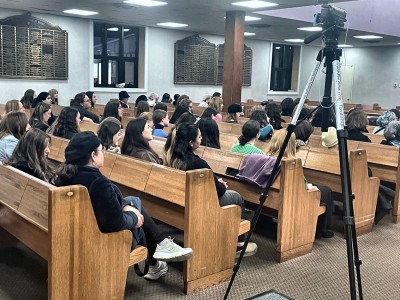
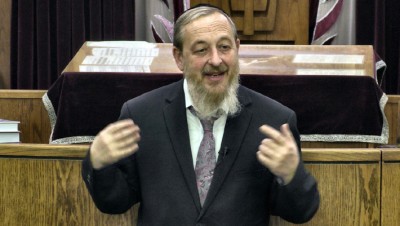
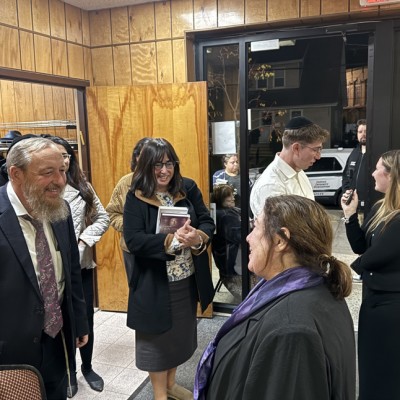
That question was at the heart of Rabbi Menachem Nissel’s address organized by Chazaqon Motza’ei Shabbat, October 24, titled “Hashem’s Special Forces: Why We Are Chosen to Live in These Times.” Rather than dwell on the darkness confronting klal Yisrael, Rabbi Nissel challenged listeners to recognize the responsibility entrusted to them.
Born and educated in Britain, Rabbi Nissel is a Yerushalayim-based Torah educator, author, and international lecturer known for combining profound hashkafah with characteristic British humor. A talmid of Rav Shlomo Wolbe zt”l and Rav Moshe Shapiro zt”l, Rabbi Nissel has taught in numerous yeshivot and seminaries and served in educational roles with NCSY and Ner LeElef. His sefarim include Rigshei Lev: Women and Tefillah and Looking into the Sun, a biography of Rav Moshe Shapiro.
Introducing the evening’s speaker, Rabbi Avraham Nissanian reflected on a world seemingly overwhelmed by sheker. Although truth appears obscured, Rabbi Nissanian expressed confidence that this generation would witness its ultimate revelation with the arrival of Mashiach.
Born in Shiraz, Iran, and raised in Israel, Rabbi Nissanian served as an Israeli military officer during the Yom Kippur War before settling in the United States. A longtime Queens spiritual leader and former mara d’atra of Congregation Shaare Tova in Kew Gardens, Rabbi Nissanian founded Eshel Avraham to bring Torah education to Israeli, Persian, Bukharian, and other Jewish communities.
Drawing upon the opening and closing words of Creation, Rabbi Nissanian explained that the final letters of “Bereishit bara Elokim” contain the letters of emet—truth—but out of sequence. By contrast, the final three words of “asher bara Elokim la’asot” conclude with those same letters in their proper order.
The distinction reflects humanity’s struggle to comprehend suffering. October 7, rising antisemitism, and the tzarot confronting klal Yisrael leave people asking painful questions. Why did this happen? Why must we endure such suffering?
What appears disordered today, Rabbi Nissanian suggested, will ultimately be understood within Hashem’s greater plan. The emet has not changed; our ability to perceive it remains incomplete. Rabbi Nissanian concluded with a heartfelt hope that all would merit witnessing Mashiach Tzidkeinu bim’heirah b’yameinu.
Rabbi Nissel approached the evening’s central question through an unexpected image: a marathon runner entering the stadium, exhausted and barely able to continue, yet greeted by thunderous applause.
To someone watching only those final moments, the celebration seems incomprehensible. The runner appears weak, struggling to cover a distance an ordinary person might complete faster. What the spectator has missed is the grueling race already run.
So it is with Jewish history. Earlier generations endured exile, persecution, and extraordinary spiritual challenges. Each fulfilled a mission uniquely its own. Our generation, Rabbi Nissel suggested, has been entrusted with the final stretch.
The runner need not repeat the marathon. The task is to cross the finish line.
That, Rabbi Nissel explained, is why this generation may be understood as Hashem’s special forces. Elite soldiers undertake unconventional missions requiring uncommon resolve. Likewise, Jews living through these extraordinary times have been entrusted with responsibilities demanding particular strength.
To explain that mission, Rabbi Nissel turned to a Midrash describing the creation of Adam. When Hashem consulted the heavenly angels, chesed and tzedek favored humanity’s creation, while emet and shalom opposed it. Human beings would perform kindness and righteousness, but would also lie and quarrel.
Drawing upon the Maharal, Rabbi Nissel explained the distinction. Even a small act of kindness remains genuine kindness. Truth, however, cannot accommodate falsehood; peace remains incomplete while conflict persists.
According to the Midrash, Hashem resolved the impasse by casting emet to the earth.
But why cast truth downward?
Rabbi Nissel described truth as something entrusted to humanity to uncover. Rather than arriving fully revealed, emet must emerge through human choices, sacrifices, and spiritual labor. Our responsibility is not merely to expose falsehood, but to cultivate what is genuine.
That challenge has become particularly acute in an age when technology manufactures convincing illusions, public discourse rewards distortion, and competing narratives threaten to overwhelm independent judgment.
Yet the struggle between emet and sheker is also profoundly personal. Every individual carries private burdens, disappointments, fears, and unanswered questions. Maintaining dignity, faith, and moral clarity amid those struggles requires spiritual courage.
Where, then, can truth be preserved?
Rabbi Nissel identified three sanctuaries: the Jewish home, the beit midrash, and the beit knesset.
The home must become a mikdash me’at, where kedushah coexists with warmth, laughter, and genuine relationships. The beit midrash preserves Torah’s eternal wisdom against passing fashions. The beit knesset offers a refuge for sincere t'fillah, where a Jew can stand before Hashem without pretense.
These institutions are not escapes from the world. They provide the strength to confront it.
Invoking a teaching of Rav Shlomo Wolbe zt”l, Rabbi Nissel urged listeners to adopt the perspective of a pilot looking down from above. From ground level, events appear chaotic and disconnected. From a higher vantage point, a broader pattern becomes visible.
That perspective does not eliminate suffering or answer every question. It changes how one lives amid uncertainty. Rather than surrendering to the noise of the moment, a Jew can draw upon the wisdom of Chazal, the teachings of earlier generations, and the conviction that history has purpose.
The message carried particular weight because Rabbi Nissel had been developing the address since Simchat Torah 5784. Three years after the October 7 atrocities, the questions remain painful. Yet Rabbi Nissel asked listeners to consider not only what this generation has endured, but what it has been chosen to accomplish.
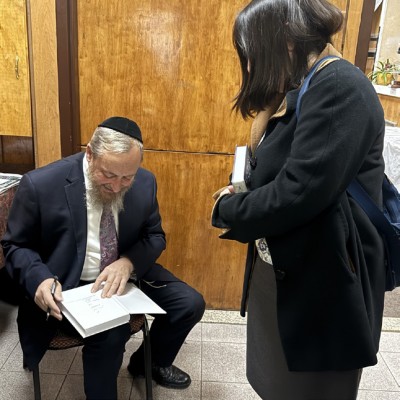
The evening also carried a personal remembrance. Rabbi Nissel acknowledged the Nissanian family’s sponsorship of an earlier edition of a book in memory of Yaeer-Netzer
, the eldest son of Rabbi Avraham and Siporah Nissanian, who died in a car accident. In the years following their loss, the Nissanians channeled their grief into helping other bereaved families. Rabbi Nissel reflected on the enduring merit of perpetuating a loved one’s memory through Torah learning.
As the address concluded, Rabbi Nissel returned to the image of special forces. Each listener, whatever the circumstances of life, possesses a mission that cannot simply be assigned to someone else.
The generation approaching the finish line may be exhausted, bearing the scars of a difficult journey. But completing what earlier generations began demands perseverance.
The question, ultimately, is not why we must live through these times, but what we will do with the responsibility of having been chosen to live in them.
By Shabsie Saphirstein
Hashem’s Special Forces: Why Were We Chosen?
Typography
- Smaller Small Medium Big Bigger
- Default Helvetica Segoe Georgia Times
- Reading Mode