


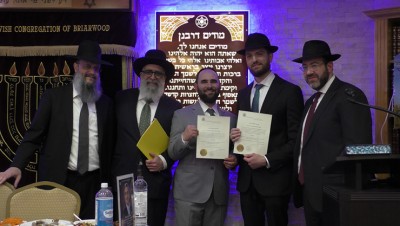

Yeshiva Etzion Of Briarwood Confers Semicha Upon Rabbi Ariel Kaminas And Rabbi Dr. Yosef Zaurov Under The Leadership Of Rabbi Avraham Gaon
The semicha ceremony at Yeshiva Etzion in Briarwood marked the continued development of Torah leadership within the Bukharian Jewish community of Queens, where semicha is understood not as a credential, but as a responsibility.
Rabbi Simantov Yanetz, Mara D’atra of the Bukharian Jewish Congregation of Briarwood, where the event was held, set that tone from the outset. Drawing from years of building Torah within the community, Rabbi Yanetz framed that evening prior to Pesach not as a celebration of achievement, but as the continuation of responsibility placed upon those who carry Torah forward.
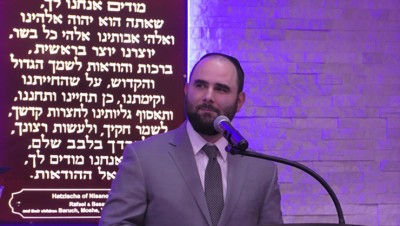
Rabbi Dr. Yosef Zaurov opened with his journey into learning. At 19 years old, while in college and already keeping Shabbat, Rabbi Yosef had never opened a Gemara. A single night class—just one hour—changed everything. Rabbi Yosef recalled learning Masechet Sotah and the moment the Gemara began to make sense to him. What began as a first step turned into years of learning. Even now, that same masechta continues to be learned, completed, and begun again.
“One Hour Of Torah Can Change The Entire Direction Of A Person’s Life.”
— Rabbi Dr. Yosef Zaurov
Rabbi Yosef then turned to the Torah’s own language for semicha, pointing to Moshe Rabbeinu’s appointment of Yehoshua. On the word “kach,” Rashi explains that Moshe did not physically take Yehoshua, but elevated him through words, recognizing the responsibility now being placed on him. Rabbi Yosef used that to define what a rabbi is—not a title or something decorative, but a responsibility.
Rabbi Yosef contrasted this with systems built around study and certification alone. The Torah’s model, Rabbi Yosef explained, demands more. The word “lecha” teaches that a rebbi must know the student, examine him, and understand who he is and what he will do with what he has learned. Rabbi Yosef then connected this to the semicha of korbanot. A person leans with full weight on the animal and recognizes what should have happened to him. That same sense of weight, Rabbi Yosef explained, carries into semicha and into the decisions that follow it. The chain of semicha, Rabbi Yosef noted, links each generation back to Moshe Rabbeinu himself.
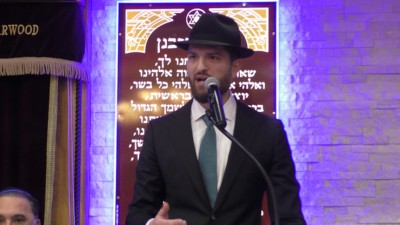
Rabbi Ariel Kaminas approached the topic from a different angle, focusing on mindset. A person often looks for the minimum—what must be done, and no more. Rabbi Kaminas illustrated this through the pressures of erev Shabbat, when the clock is ticking and a person begins calculating what can still be done. That, Rabbi Kaminas explained, is exactly why Chazal established safeguards. Once a person begins negotiating with mitzvot, the line begins to shift.
“A Yid Does Not Live By The Minimum—He Lives By What Hashem Wants From Him In This Moment.”
— Rabbi Ariel Kaminas
Rabbi Kaminas noted that in other areas Chazal did not create additional fences. They trusted that a Jew would not approach mitzvot in that way. The difference lies in mindset. A person focused on the bare minimum drifts toward the edge; a person asking what Hashem wants does not.
Rabbi Kaminas also addressed where mussar fits into a life centered on Gemara. Proper Torah learning includes all of it—not only what is mutar and assur, but how a person thinks, weighs, and acts. Even small actions, Rabbi Kaminas emphasized, require honest evaluation.
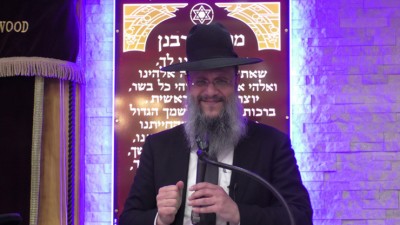
Rabbi Avraham Gaon, Rosh HaYeshivah, spoke about the years behind this moment. This was not a process of simply covering material, but one of testing, challenge, and growth until the learning became part of the person. Through years of effort and accountability, Rabbi Gaon explained, these students were pushed to know that they know—and to connect Torah to life itself.
“Torah Is Not What You Know—It Is What You Become.”
— Rabbi Avraham Gaon
In describing the new rabbanim, Rabbi Gaon spoke with precision. Rabbi Dr. Yosef Zaurov was described as someone with a burning passion for Torah, the kind that elevates those around him. Rabbi Ariel Kaminas was described as steady, dependable, and deeply rooted in the yeshivah—someone capable of carrying it forward. These were observations formed over years.
Rabbi Gaon took the point further, announcing that semicha is not something to hang on a wall. It is a commitment—to carry Torah in one’s heart and to carry people on one’s shoulders. A rabbi must know how to listen, how to strengthen, and how to stand beside people at the moments that matter most.
Rabbi Gaon also thanked the parents and families who supported the years of learning, and then highlighted something often overlooked—the wives who encouraged and sustained that commitment. Rabbi Gaon connected that strength to the role of righteous women in both the redemption from Egypt and the future redemption.
Rabbi Yanetz then introduced Chazaq Director Rabbi Meirov, sharing a thought heard directly from the Rishon Lezion of Eretz Yisrael. When Rav David Yosef was asked about Rav Ilan, the Torah luminary responded simply, “He is like my son.”
“Do Not Become Comfortable—Go Out And Spread Torah.”
— Rav Ovadia Yosef, ztk"l, As Shared By Rabbi Simantov Yanetz
Rabbi Yanetz explained that such a statement reflects deep trust, closeness, and years of shared purpose in building Torah describing how Rav Ilan, together with his brother Rav Yaniv, built Torah in Queens without external backing, guided by a clear mission and by the directive of Rav Ovadia Yosef to never become comfortable and to continue spreading Torah. What exists today, Rabbi Yanetz emphasized, did not develop on its own—it was built deliberately.
Rav Ilan continued in that same spirit. Looking out at a full room just days before Pesach, the outreach maven noted simply: people chose to be present.
“If Even One Child Is Missing, Nothing Else Matters.”
— Rabbi Meirov
Rav Ilan spoke warmly about Rabbi Yanetz, describing him as “all heart,” and highlighting the sincerity and consistency with which Torah has been built in Briarwood. Rav Ilan also praised Rabbi Gaon’s years of teaching and the many students shaped under the Rosh HaYeshivah's guidance. Of the two new musmachim, Rav Ilan noted, that even without personal familiarity, it was clear they would represent Torah properly and bring about a kiddush Hashem.
Turning to family and Pesach, Rav Ilan used the image of a crowded bus in Yerushalayim to introduce a deeper point about children and the meaning of “echad” in the Haggadah. Each child is not part of a group—each one is everything.
Rav Ilan illustrated this with a story of two brothers, one wealthy without children and one poor with many. When the wealthy brother offered a fortune in exchange for adopting one child, the parents found they could not part with even one. A person does not have many children—each child is a world of his own.
Rav Ilan then addressed a reality many families face. It is easier to give distractions than to give time. Yet the early years are when most of the time between parent and child takes place—and once that time passes, it does not return.
Pesach, Rav Ilan emphasized, is the time to reconnect—to children, to parents, and to Torah itself. Quoting the Ben Ish Chai as a reminder to the audience that when a person assumes there will always be time to change later, that “later” continues to move.
By the close of the evening, the message returned to where it began: semicha is not a title—it is the responsibility to carry Torah and to carry people. It is not a certificate, but a commitment—to carry Torah seriously and to be there for others when it matters most.
By Shabsie Saphirstein
Carrying The Weight Of Torah
Typography
- Smaller Small Medium Big Bigger
- Default Helvetica Segoe Georgia Times
- Reading Mode