


Imagine you are struggling under the heavy weight of anxiety or depression. You visit your doctor, begin treatment, and after a few weeks you start to feel lighter. The edge is taken off. Then you discover that the pill you were taking was nothing more than sugar and starch.
It sounds like a trick, doesn’t it?
Yet decades of carefully conducted clinical trials have consistently shown that placebos—treatments with no active medication—can produce measurable improvements in some people with mental health conditions. How can a sugar pill affect illnesses that we know have real biological components? Is the placebo effect simply a myth, or is something more complex taking place?
Let’s pull back the curtain and explore what is really happening.
The Biological vs. Psychological Tug-of-War
For many years, depression and anxiety were often explained primarily through brain chemistry, sometimes simplified as a “chemical imbalance.” Today, we know the picture is far more complex. Biology, psychology, life experiences, and environment all influence mental health, and each affects the others.
Even well-studied psychiatric medications do not work equally well for everyone. Likewise, psychotherapy alone may be enough for some individuals but not for others.
The reality is that mental health conditions arise from an intricate interaction between the mind and the brain. Our thoughts influence brain chemistry, and brain chemistry influences our thoughts.
The Neuroscience Of Expectation
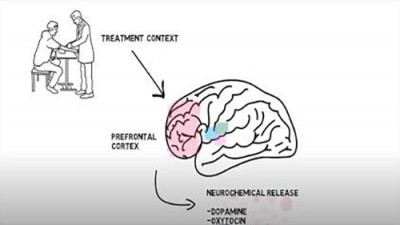
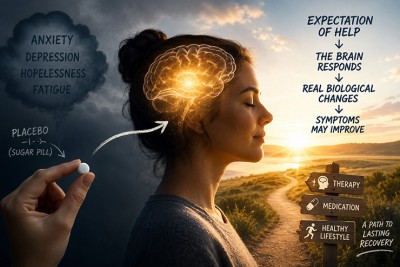
When someone receives a placebo, the brain does not simply ignore the inactive pill. Instead, it responds to the expectation of being helped.
Research has shown that believing treatment is underway can trigger real biological changes in the brain. Neuroimaging studies suggest that the expectation of improvement can activate brain circuits involved in emotion, motivation, and reward, leading to measurable changes in naturally occurring brain chemicals, including dopamine and endorphins. In other words, hope and expectation can influence how the brain responds.
That does not mean the illness is imaginary. Rather, it demonstrates that our expectations can have measurable effects on both our emotional and biological responses.
Curing Symptoms Or Providing Hope?
But we need to look more closely at the research.
When a study reports that a placebo “helped” someone with depression or anxiety, what does that actually mean?
In many cases, the placebo provides hope, expectation, and the belief that improvement is possible. That psychological shift can temporarily reduce symptoms for some individuals.
Joining a clinical trial also means receiving attention from healthcare professionals, taking active steps toward recovery, and believing that help may finally be on the way. Together, these factors can create meaningful—but often temporary—improvement.
It is also important to recognize that an improvement on a symptom questionnaire does not necessarily mean the underlying illness has resolved. Feeling somewhat better is not the same as achieving lasting recovery.
Beyond The Sugar Pill: What Actually Works?
Because the placebo effect is largely driven by hope and expectation, its benefits often diminish over time. It cannot replace targeted treatment.
If you are seeking long-term recovery, research consistently points to a combination of evidence-based approaches:
- Psychotherapy: Treatments such as Cognitive Behavioral Therapy (CBT) help people develop healthier thought patterns, stronger coping skills, and more effective ways of addressing underlying problems.
- Targeted Medication: When symptoms are severe or persistent, appropriately prescribed medication can help restore healthier brain functioning and reduce debilitating symptoms.
- Healthy Lifestyle Habits: The gut and brain are closely connected. Nutritious food, quality sleep, regular physical activity, stress management, and healthy daily routines all contribute to emotional well-being.
The Takeaway
The placebo effect is not a myth, but neither is it a miracle cure.
Instead, it reminds us that hope itself has measurable biological power. The expectation that healing is possible can influence how our brains respond—even before a medication begins to work.
But hope alone is rarely enough.
Lasting recovery comes from combining evidence-based treatment, healthy lifestyle choices, and meaningful psychological support. When we address both the mind and the body, we give ourselves the greatest opportunity not simply to feel better—but to heal.
David Kahan is a Licensed Clinical Social Worker and psychotherapist with over a decade of experience. He has worked in various mental health clinics and is now seeing clients in private practice. He is currently accepting clients dealing with new or established mild to moderate mental health diagnoses and can be reached at This email address is being protected from spambots. You need JavaScript enabled to view it. or 718-350-5408.
The Power Of The Placebo: Mind Magic Or Real Medicine?
Typography
- Smaller Small Medium Big Bigger
- Default Helvetica Segoe Georgia Times
- Reading Mode