


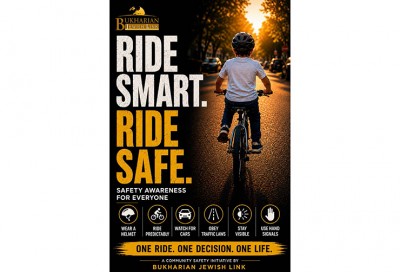
There are few sights more synonymous with summer than children out on two wheels. You see them on bicycles, scooters, electric models, and even mopeds. Whether they are heading to a friend’s house, camp activities, the local park, or a nearby store, these rides are woven into the rhythm of the season. For many families, they are as much a part of summer as day camp, afternoons in the beit medrash, and long evenings spent outdoors. They represent freedom, independence, and the simple joys of childhood.
For emergency volunteers, however, those same scenes also mark the beginning of a season filled with preventable trauma. Every year, medics respond to calls involving children who lose control, crashes involving motorized devices, collisions with motor vehicles, and falls caused by loose gravel or simple misjudgment. While many youngsters walk away with scrapes and bruises, others require ambulance transport, emergency surgery, or months of rehabilitation. In the most heartbreaking cases, what began as a carefree ride changes a family’s life in a matter of seconds.
As high-speed e-bikes and similar gear become common, responders are reminding families that safety begins long before a child leaves the driveway. Riding with traffic, remaining alert, obeying traffic laws, avoiding distractions, using hand signals, staying visible, and wearing a properly fitted helmet are simple habits that dramatically reduce the risk of serious injury. Just as importantly, parents should carefully consider whether a particular piece of equipment is appropriate for a child’s age, maturity, and experience.
The need for those reminders is supported by sobering statistics. The National Highway Traffic Safety Administration reports that more than 1,100 bicyclists are killed each year in traffic crashes across the United States. Tens of thousands more suffer injuries requiring medical attention. Although those figures focus on traditional bicycles, hospitals have also seen a significant increase in injuries involving electric versions as their popularity has grown. Children are especially vulnerable because they are still developing the judgment needed to accurately assess speed, distance, and changing traffic conditions.
Neighborhoods take on a different rhythm during the summer months. Streets that are relatively quiet during the school year suddenly fill with children, delivery vans, camp buses, maintenance trucks, and pedestrians. In many vacation communities, golf carts add another layer of activity. It is an environment where everyone, children and adults alike, must be more aware of their surroundings.
It is also important to remember that not every serious injury involves a collision with a car. A child can lose control while riding downhill, strike a pothole, skid on loose gravel, or take a turn too quickly. These falls can result in broken bones, facial injuries, and traumatic brain injuries. That is why helmets remain the single most effective piece of safety equipment a rider can wear. A properly fitted helmet cannot prevent every accident, but it can significantly reduce the severity of an injury when one occurs.
Parents have an equally important role to play. Take a few moments to inspect brakes, tires, handlebars, and wheels. Ensure helmets fit properly, discuss safe routes, and establish clear rules about where and what children are permitted to ride. These simple steps can prevent accidents before they happen. Not every child is ready for an electric scooter, e-bike, or moped. Likewise, machines designed for off-road use belong in appropriate, supervised settings—not on neighborhood streets.
Drivers also share in that responsibility. During the summer, motorists should expect children near parks, camps, shuls, schools, and residential neighborhoods. Slow down, eliminate distractions, check carefully before backing out of a driveway, and anticipate that a child may suddenly enter the roadway. Those small acts of caution can prevent unimaginable tragedy.
The Torah teaches that preserving life, pikuach nefesh, is among our highest obligations. Hatzolah volunteers live that principle every day, responding whenever help is needed. Yet every volunteer will tell you that the greatest emergency is the one that never happens. Every accident prevented means one less ambulance dispatched, one less family rushing to an emergency room, and one less life forever changed.
Summer should be remembered for laughter, friendships, family outings, and carefree days spent outdoors, not for flashing lights and ambulance sirens. Every ride carries a measure of trust: trust that children will make responsible choices, that parents will provide guidance, and that drivers will remain vigilant. A properly fastened helmet, a little patience, and a moment of good judgment may seem like small things. Together, they save lives. In a community that cherishes the sanctity of life, there is no greater success than making sure every child returns home safely at the end of the day.
By Shabsie Saphirstein
Summer On Two Wheels
Typography
- Smaller Small Medium Big Bigger
- Default Helvetica Segoe Georgia Times
- Reading Mode