


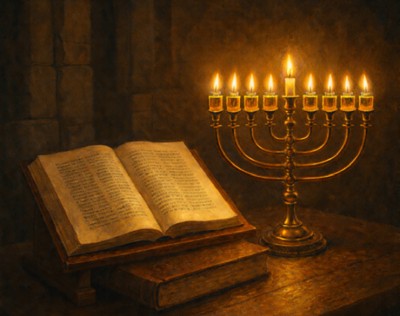
On Chanukah, two miracles occurred for klal Yisrael: the miraculous military victory over the Greeks, and the miracle of the oil — a single flask that burned for eight days.
Yet Rav Shimshon Chaim Nachmani, zt”l, author of Zera Shimshon, raises a penetrating question: Why was the miracle of the oil necessary at all?
After all, the very name of the festival — Chanukah, chanu kaf-heh, “they rested on the 25th” — points to relief from oppression. The Greeks were defeated. The danger had passed. Should that not have been sufficient cause for celebration?
Victory Was Never The Goal
Rav Nachmani explains that during Greek rule, Jewish life had become nearly impossible. Core observances — Shabbat, kashrut, brit milah, family purity, Rosh Chodesh — were outlawed or aggressively suppressed. Torah was not merely discouraged; it was targeted.
When the Hasmoneans triumphed, Hashem wished to teach a critical lesson:
Military victory is never an end in itself. It is only a means.
The purpose of salvation was not power, sovereignty, or revenge — but the restoration of Torah u’mitzvot. The miracle of the oil was Hashem’s way of making that unmistakably clear.
A Contrast From Secular History
To illustrate this idea, consider a familiar historical example.
More than 250 years ago, American colonists rebelled against British rule over heavy taxation without representation. Protests escalated into war, and against tremendous odds, the colonists emerged victorious. To this day, Independence Day is celebrated with great fanfare — fireworks, parades, and pride.
Why?
Because they won.
Victory itself is viewed as the achievement. The triumph is the message.
But Torah thinking is fundamentally different.
Why The Candles — Not The Battle
In Jewish tradition, winning has no inherent value. Victory matters only for what it enables.
This is why Chazal established Chanukah not as a celebration of military conquest, but as a mitzvah centered on light — the lighting of the Menorah. The candles symbolize Torah, mitzvot, and spiritual clarity. They represent our renewed ability to serve Hashem freely and openly.
The miracle of the oil was Hashem’s declaration:
The war mattered only because it brought you back here — to the Menorah, to the mitzvot, to Me.
By choosing light over swords, the Sages taught future generations that Jewish survival is measured not by dominance, but by devotion.
The Eternal Chanukah Message
Chanukah reminds us that freedom without purpose is hollow. Triumph without Torah is empty. The true celebration is not that we defeated our enemies — but that we were once again able to live as Jews, illuminating the world with holiness.
That is why the candles, not the battlefield, became the eternal symbol of Chanukah.
Rabbi Leeor Dahan, a graduate of Yeshiva Chofetz Chaim/RSA, is a noted scholar and teacher, well-versed in halachah. He currently leads Kehilat Avodat Hashem in Hillcrest, Queens, inspiring his congregation to delve into Torah study and embrace its eternal teachings.
From War To Light: The True Purpose Of Chanukah
Typography
- Smaller Small Medium Big Bigger
- Default Helvetica Segoe Georgia Times
- Reading Mode