


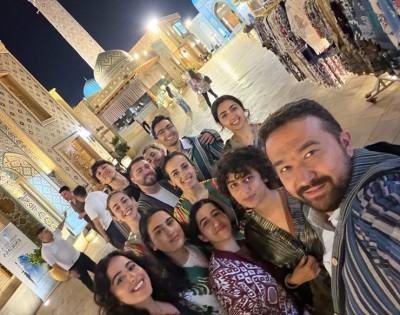
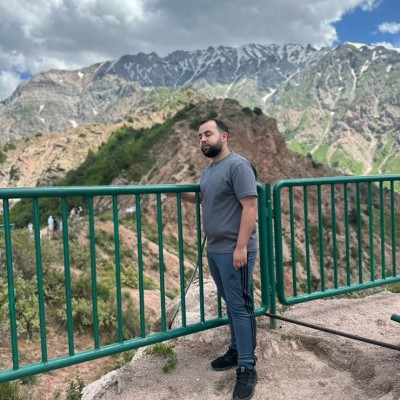
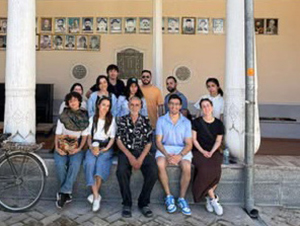
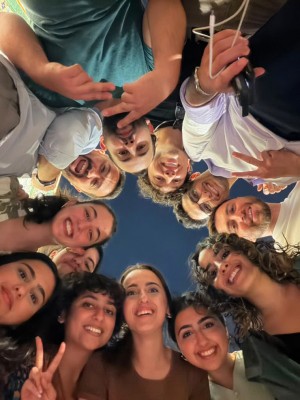
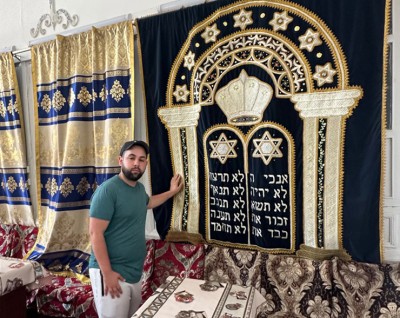
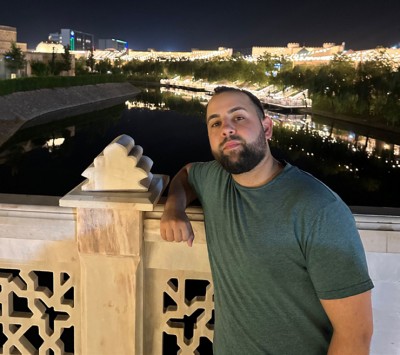
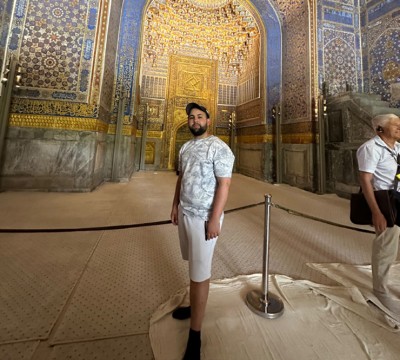
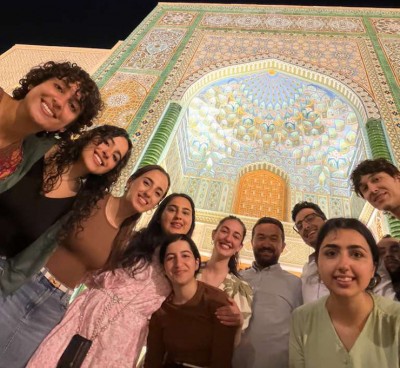

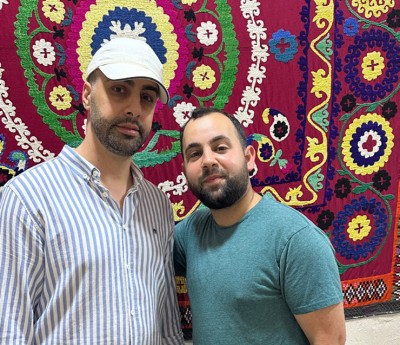
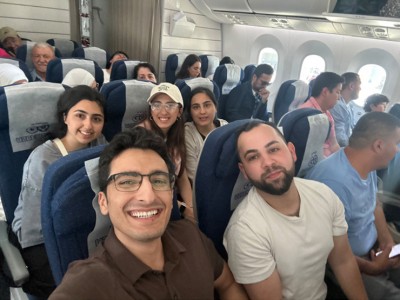
Forest Hills resident David Shakhmoroff reflects on a week-long Bukharian Congress heritage mission through the homeland of his ancestors.
Editor’s Note: In late May, the Bukharian Congress organized a week-long heritage mission to Uzbekistan for ten young Bukharian Jews from New York, Florida, and Georgia. Led by Dudi Bar, who works with the Bukharian Congress organizing heritage programs for young adults, the journey introduced participants to the places, traditions, and history that shaped Bukharian Jewish life in Central Asia for centuries. Upon returning home, Forest Hills resident David Shakhmoroff sat down with the Bukharian Jewish Link to reflect on the experience.
For many young Bukharian American Jews, Uzbekistan is a place they have only known through the stories of their parents and grandparents. Earlier this year, David Shakhmoroff experienced that homeland firsthand. As one of ten participants on the Bukharian Congress heritage mission, he spent a week exploring the historic cities, communities, and landmarks that tell the story of Bukharian Jewish life. David spoke with us about reconnecting with his family's heritage, the friendships formed along the journey, and why more young Bukharians should experience Uzbekistan for themselves.
Q: What motivated you to join this heritage mission, and what were your expectations before arriving?
David Shakhmoroff: My mother was born in Uzbekistan, so for me this wasn’t just another trip — it was a journey to the homeland of my family. Before I left, my parents asked me, "David, what did you lose over there? What could you possibly find there that you don’t already have here in America?"
It was a fair question, but I wanted to experience my heritage firsthand. More than anything, I wanted to walk the streets where my family came from and see our history with my own eyes. This wasn’t just a vacation or a sightseeing trip. It was an opportunity to better understand Bukharian Jewish history, connect with my family’s heritage, and gain a much deeper appreciation for my own roots.
Q: Tell us a bit more about how the trip came together.
David: The trip ran from May 26 through June 2. It was hosted by Dudi Bar, who works with the Bukharian Congress organizing heritage programs for young adults. Earlier this year, Dudi led a shorter heritage trip, but this was the first time hosting a full week-long journey through Uzbekistan.
Everything was exceptionally well-coordinated. Dudi created an itinerary that balanced deep Jewish history with opportunities for our group to build friendships and spend meaningful time together throughout the week.
Q: Which specific places did you visit?
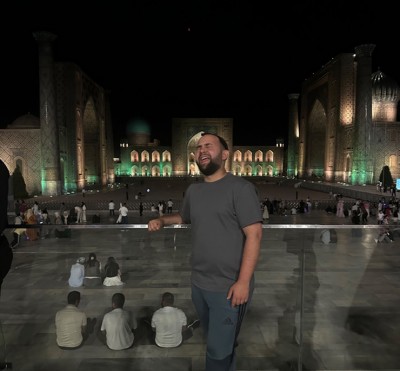
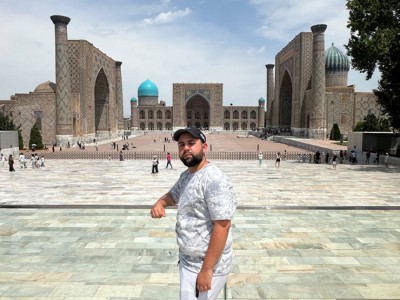
David: We traveled through Tashkent, Samarkand, Bukhara, and the Chimgan mountains. Every place we visited taught me something new about Bukharian Jewish history. We explored centuries-old architecture reflecting Uzbekistan’s rich cultural and Jewish heritage, and we also experienced the breathtaking beauty of the Chimgan mountain region. Seeing these cities firsthand gave me an entirely new perspective on my heritage.
Q: Was there a particular moment that really stayed with you?
David: Spending Shabbat with Bukharian Israelis who were also visiting Uzbekistan was one of the most meaningful parts of the trip. Even though we grew up thousands of miles apart and lived in different countries, the moment we sat down together, we felt like family because of our shared traditions and heritage.
Visiting the historic synagogues in Samarkand and Bukhara, and walking through the old Jewish cemeteries, was incredibly powerful. History was no longer something I had only heard about — it became real.
“You can read about your heritage, but nothing compares to walking through the cities where your ancestors lived. That’s when history truly comes alive.”— David Shakhmoroff
Q: What surprised you most about modern Uzbekistan?
David: I was amazed by how much of that history still remains. Seeing the historic neighborhoods and synagogues in person made my family’s history feel real. Standing there made me realize just how resilient and vibrant Bukharian Jewish life was there for centuries.
Q: How was kashrut maintained throughout the journey?
David: Maintaining kashrut was completely seamless. Everything was strictly glatt kosher and provided by Kosher Asia Travel in coordination with Rabbi Babayev’s parents. The food was outstanding, and it was a relief not having to worry about kashrut logistics throughout the trip.
Q: Beyond the historical sites, what was it like traveling with a group of young Bukharians from different states?
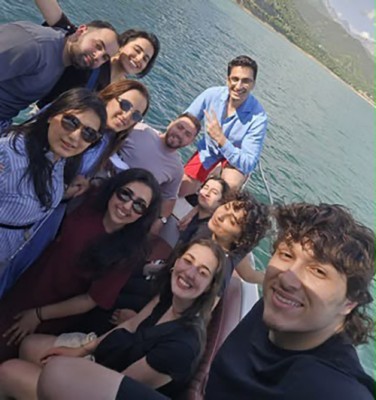
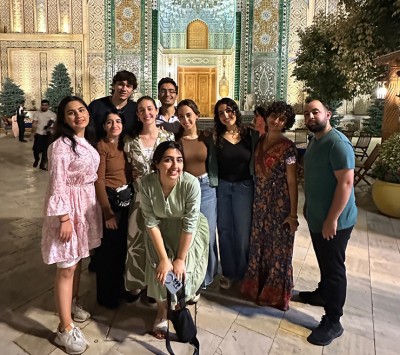
David: That was honestly one of the best parts. We came in as strangers from New York, Florida, and Georgia, but by the end of the week we had become a close-knit group of friends. Sharing those experiences together created friendships that I believe will last for years to come.
Q: After experiencing the legacy of Bukharian Jewish life firsthand, what responsibility do you think young Bukharians have today?
David: We have to keep our history alive. If we don’t actively learn about where we came from and pass those stories down to the next generation, they can easily fade away. Books and photographs are important, but nothing replaces the impact of actually going there.
Q: Looking back, why do you believe heritage trips like this are so important for the next generation?
David: What will stay with me most is standing in synagogues where generations of our people prayed before us. I left Uzbekistan with a much stronger sense of identity and a deeper appreciation for everything our ancestors built.
Many young Jews travel to Poland to connect with the history of European Jewry. I hope more young Bukharians will also have the opportunity to visit Uzbekistan because this is where our families lived, our traditions flourished, and generations of Bukharian Jews built thriving communities. Visiting Uzbekistan gives you the opportunity to connect with that history in a deeply personal way. There is something profoundly meaningful about standing where your ancestors lived, prayed, and built vibrant Jewish communities.
I truly hope this is the first of many heritage missions like this. I hope many more young Bukharians will have the opportunity to experience where our families came from. You return home with a renewed sense of pride and a responsibility to ensure that our community’s remarkable story continues for generations to come.
Interview By Shabsie Saphirstein
Rediscovering Bukharian Roots: A Heritage Journey Through Uzbekistan
Typography
- Smaller Small Medium Big Bigger
- Default Helvetica Segoe Georgia Times
- Reading Mode