


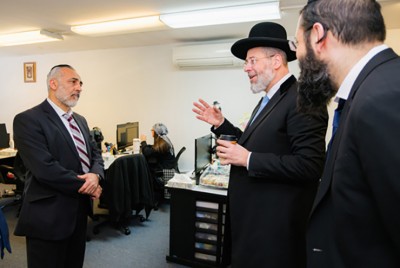
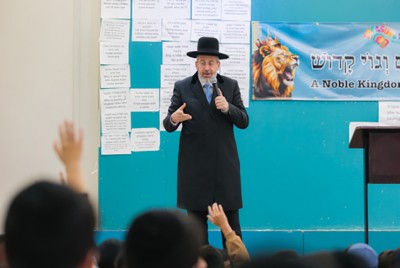
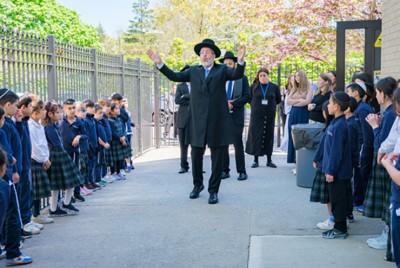
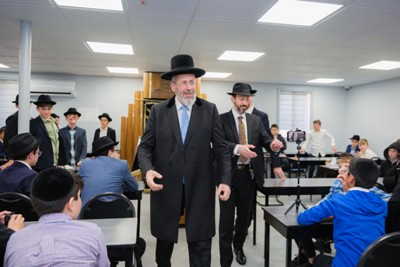
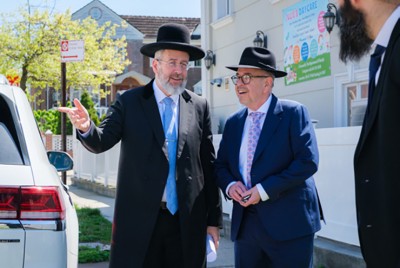
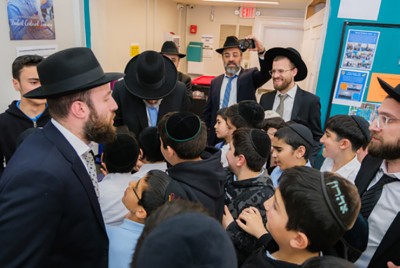
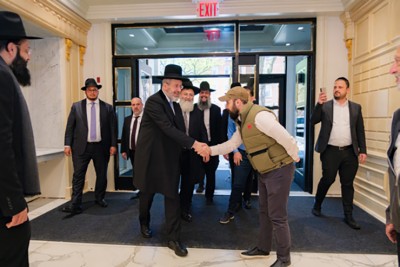
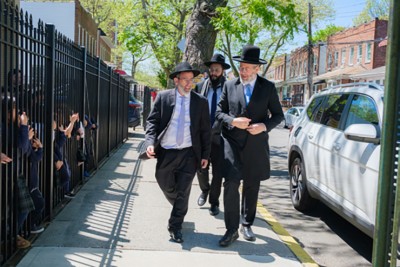
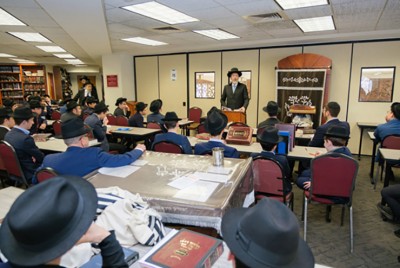
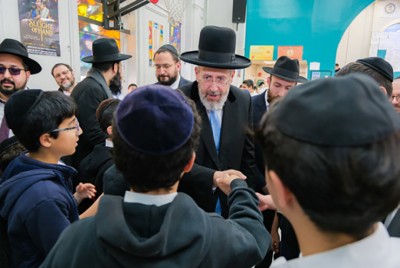
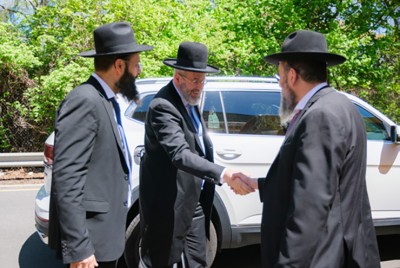
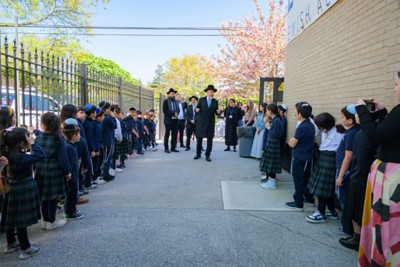
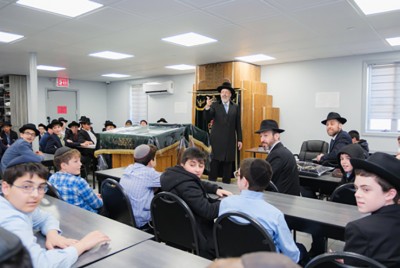
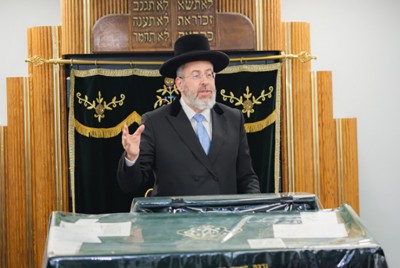
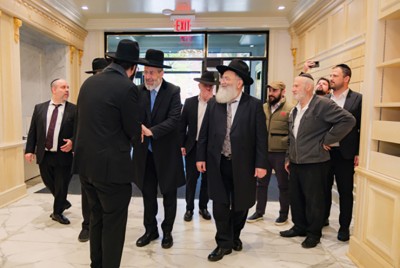
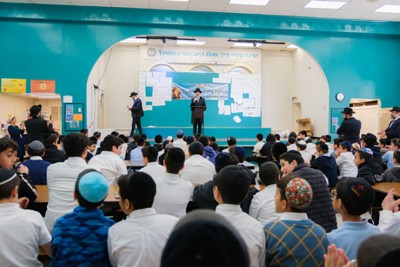
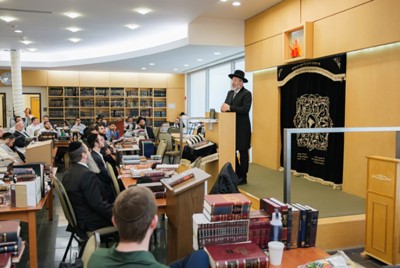
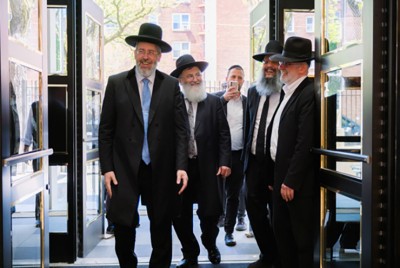
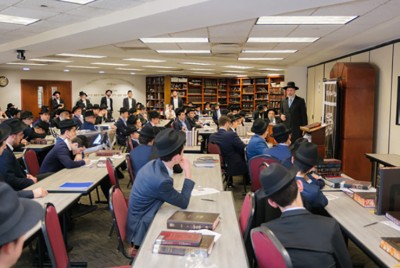
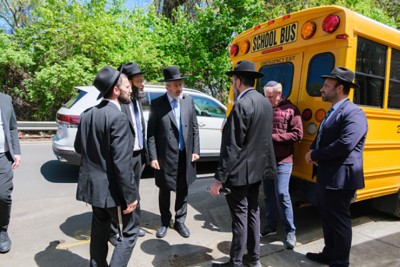
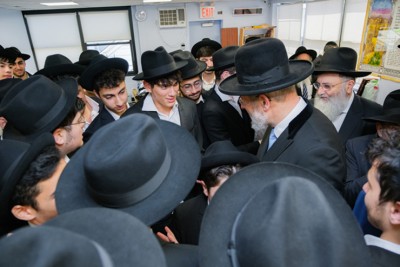
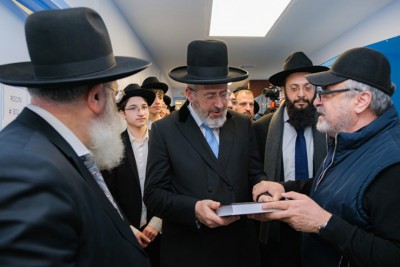
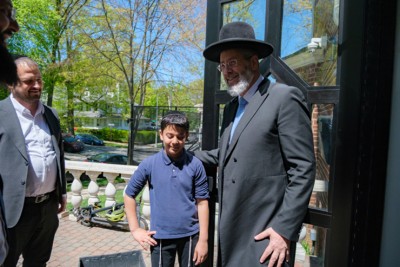
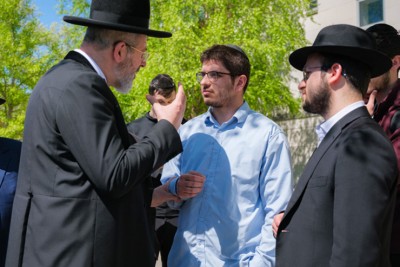
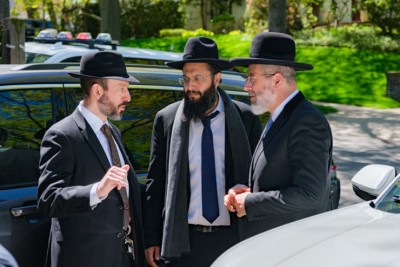
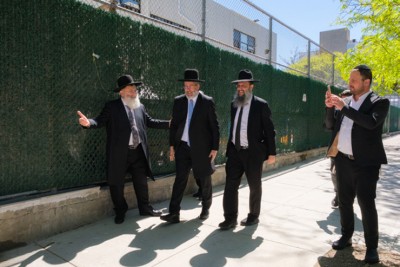
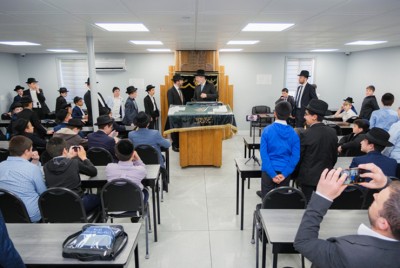
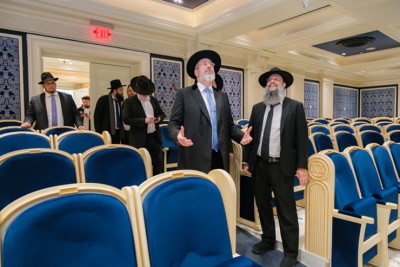
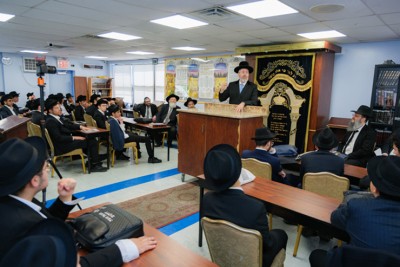
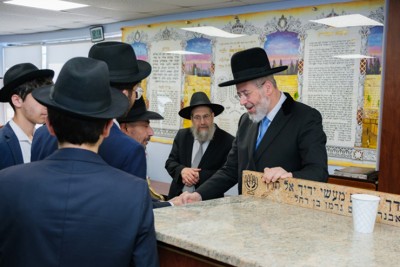
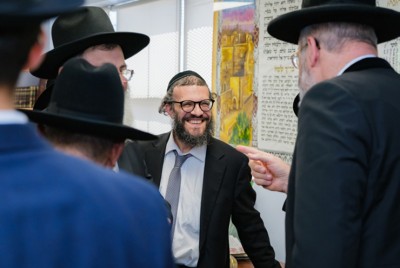
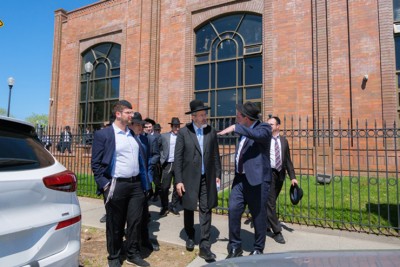
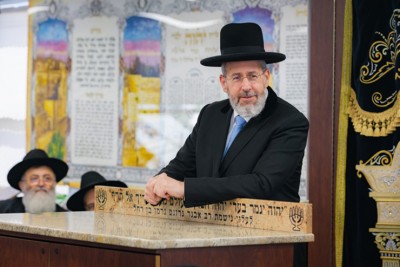
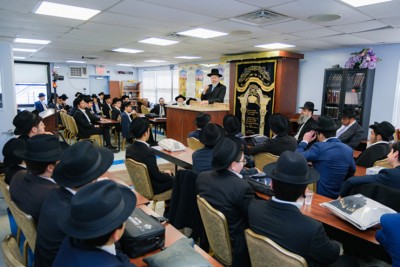
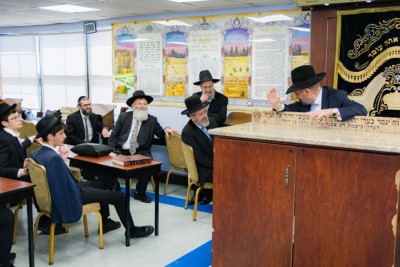
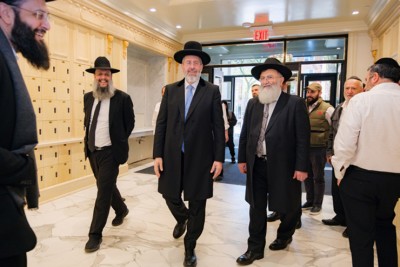
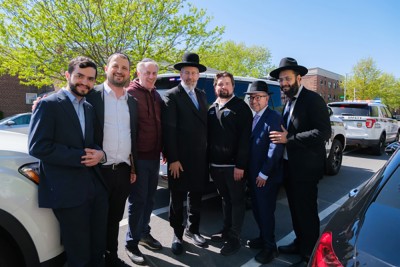
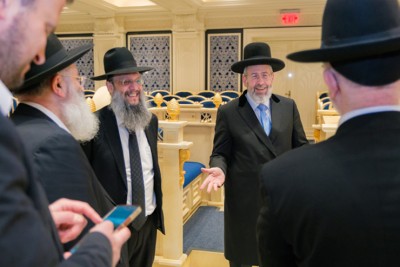
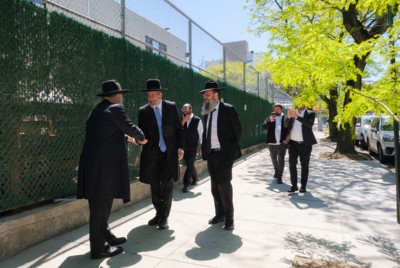
On Monday, April 27th, the Queens Torah community was immensely privileged to host Rabbi David Lau, the former Ashkenazi Chief Rabbi of Israel. The visit was organized by Rabbi Yaniv Meirov, CEO of Chazaq, offering the Rav a glimpse into the vibrant and unified mosaic of Orthodoxy in Queens. The day was made possible through the dedicated coordination of Moshe Shakar, personal assistant to the Rav. Throughout the packed itinerary, Queens Shmira escorted the Chief Rabbi, ensuring seamless travel across Kew Gardens, Forest Hills, and Kew Gardens Hills as Rav Lau spread inspiration to elementary students, high school bochurim, collegiate young men, and community leaders.
The tour began at the Beth Gavriel Center, where the rabbinic leadership—including Rabbi Emanuel Shimonov, Rabbi Israel Itzhakov, Rabbi Ilan Meirov, and Rabbi Tomer Zino—warmly greeted the visiting dignitary. While viewing the progress of the new building, the Rav expressed deep admiration for the wide range of programs already thriving within the center. From a vibrant day and night kollel to a mikvah serving both men and women, the campus was recognized as a true hub for Torah, tefillah, and community life. The delegation then moved to the older building housing Yeshiva Tiferet Tzion High School, where Rosh HaYeshivah Rabbi Moshe Aharonov provided an introduction before the former Chief Rabbi delivered a captivating shiur.
Rav Lau also toured Chazaq headquarters, receiving a briefing on the organization’s transformative outreach work. Learning how Chazaq guides public school students toward stronger Jewish connections and helps transition these youths into a yeshivah education showcased the foundational strength of the borough's Torah landscape. The former Chief Rabbi later delivered a digitally broadcast message to the loyal viewers of Chazaq's weekly Torah Talks stream.
The tour then focused on local educational institutions, beginning at Zucker Jewish Academy of Queens in Kew Gardens. Head of School Rabbi Yitzchok Wurem introduced the Chief Rabbi, allowing for the delivery of heartfelt words of encouragement to the youth. From there, the delegation moved toward Central Kew Gardens, where Menahel Rabbi Don Pacht introduced Rav Lau to the junior high school students of Yeshiva Tiferet Moshe, leaving the boys deeply inspired by the provided divrei brachah.
At the next stop, the elementary school boys at Yeshiva Sha’arei Zion warmly welcomed the honored guest in the school's lunchroom. Menahel Rabbi Ephraim Ben Mordechai introduced Rabbi Lau to the assemblage as the young boys enthusiastically sang traditional Sephardic tunes, bringing immense joy to the Chief Rabbi. Addressing the students, the Rav distilled a piercing idea, challenging the boys with the reality that a person cannot truly know Torah without a genuine desire to understand the material. This desire is the very opening through which Hakadosh Baruch Hu grants success. This point was reinforced through a brief interaction, playfully asking the eighth graders to raise a hand and engage, reinforcing that growth begins with genuine curiosity and a desire to understand. Afterward, the students had the unique opportunity to shake the Chief Rabbi's hand.
In Kew Gardens Hills, the Mesivta Chofetz Chaim students at were honored with a unique address carrying a tone both deeply rooted in halachah and strikingly practical. Following warm introductory remarks by Menahel Rabbi Yosef Singer, Rabbi Lau spoke profoundly on the often-misunderstood balance between kibbud av v'Em and morah. The Rav stressed that honoring parents is not merely about outward acts of respect, but requires sensitivity, awareness, and emotional intelligence. Morah was explicitly defined as maintaining strict behavioral boundaries, such as not sitting in a parent's chair and not directly contradicting a parent's words. If a parent misspeaks, a child must correct the mistake gently and respectfully rather than flatly saying “no.” Drawing from the Ramban and Rashba, the Chief Rabbi clarified that the formal obligation of kibbud applies specifically when parents derive direct enjoyment or benefit from the action.
Through vivid examples—from the well-known account of Rabbi Tarfon placing hands beneath his mother’s feet to maintain cleanliness, to the striking episode of Rabbi Yishmael whose mother wished to drink the water used to wash the sage's feet—the Rav illustrated that honoring parents sometimes requires setting aside personal logic in favor of understanding what truly provides nachat. The underlying message was clear: Torah is not a checklist, but a living guide demanding thoughtfulness and a constant awareness of how actions affect others. This idea expanded into a broader call to live Torah beyond the written form, actively searching for ways to bring joy to others.
However, the Rav drew a clear boundary: when a parental request conflicts with a mitzvah, one must follow the will of Hashem. The Rav expanded on this synthesis using the practical example of a child wishing to marry a specific person against parental approval, clarifying that while one must always weigh the environment of Torah, a direct mitzvah supersedes a parental demand. Transitioning seamlessly into the days of Sefirat HaOmer, the Chief Rabbi framed the period as a journey of inner refinement. Klal Yisrael distanced themselves from the idols of Egypt step by step. Reaching the midpoint of the Omer marks a moment of accomplishment, but the essential work of growth remains. Connecting this to the tragedy of Rabbi Akiva’s talmidim, the Rav noted that their downfall stemmed from a failure to show proper respect, warning that even those immersed in Torah can falter if character and interpersonal refinement are neglected. To illustrate this, the Chief Rabbi movingly recounted a specific incident where a student rejoiced at knowing a halachic answer better than the great Rabbi Tarfon. Rabbi Akiva sharply rebuked the youth, asking, "Are you happy because you knew the real answer or because you knew better than Rabbi Tarfon?" The student turned white, and the Gemara notes this individual passed away before Shavuot due to a lack of respect. The address concluded with a heartfelt brachah, expressing hope that the bochurim would grow into true talmidei chachamim, feeling how Torah uplifts the soul day after day.
The momentous Queens tour concluded at Lander College for Men, where the atmosphere blended reverence with a sense of personal connection. Menahel Rabbi Yosef Sonnenschein delivered a thoughtful introduction, honoring the Rav as the former Chief Rabbi, head of the Beis Din HaGadol, and a courageous defender of Torah and halachah. The Menahel expressed profound hakaras hatov—gratitude—to the visiting dignitary for serving as a constant source of chizuk and idud for Jews in Eretz Yisrael and abroad, and to Chazaq for bringing the Rav to the Queens bnei Torah. Noting that this was not the Rav's first visit to the institution, the Menahel added an emotional layer of continuity for those present who remembered the previous shiur. Rabbi Sonnenschein then reflected on the daily tefillah of Al HaTzadikim, suggesting that ordinary individuals can include themselves in a blessing reserved for the righteous by attaching to Torah scholars.
Responding with characteristic humility, Rabbi Lau began the address by apologizing to the collegiate men, sharing an initial hope to delve deeply into a complex sugyah in Masechet Nedarim before realizing time constraints would not allow for the intended shiur. Remarking on the discussed tefillah, the Rav noted that when reciting those words, he shared, a person does not necessarily see himself among the tzadikim, but simply as part of 'Aleinu.' From there, the concept of holiness was reframed. While acknowledging universally recognized figures like Rav Chaim ztk”l—whose words carried a clarity placed there by Hashem—or heroic soldiers like Ro'i Klein who sacrificed his life to save fellow comrades, the Chief Rabbi emphasized that holiness is not reserved for rare individuals alone. When discussing this mesirut nefesh, the Rav directed the audience to look closely at a Rashi in Parshas Chayei Sarah to better understand the true halachic definition of the word nefesh. Holiness is accessible to every Jew, rooted in the spiritual inheritance of the Avos: Avraham instilled the capacity for chesed, Yitzchak embodied mesirut nefesh, and Yaakov established the model of Torah learning. Each mitzvah, the Rav taught, is a form of sacrifice, where a person chooses to align with Hashem over personal inclination. Thus, the daily struggle with the yetzer hara becomes a constant form of kiddush Hashem.
Reflecting on the visit, Rabbi Lau shared, “I came to give chizuk, but I am leaving strengthened after witnessing a community so vibrant, so united, and so thirsty for Torah across all backgrounds.”
Former Chief Rabbi Of Israel Rav David Lau Inspires Queens Torah Community
Typography
- Smaller Small Medium Big Bigger
- Default Helvetica Segoe Georgia Times
- Reading Mode